- Tube schedule
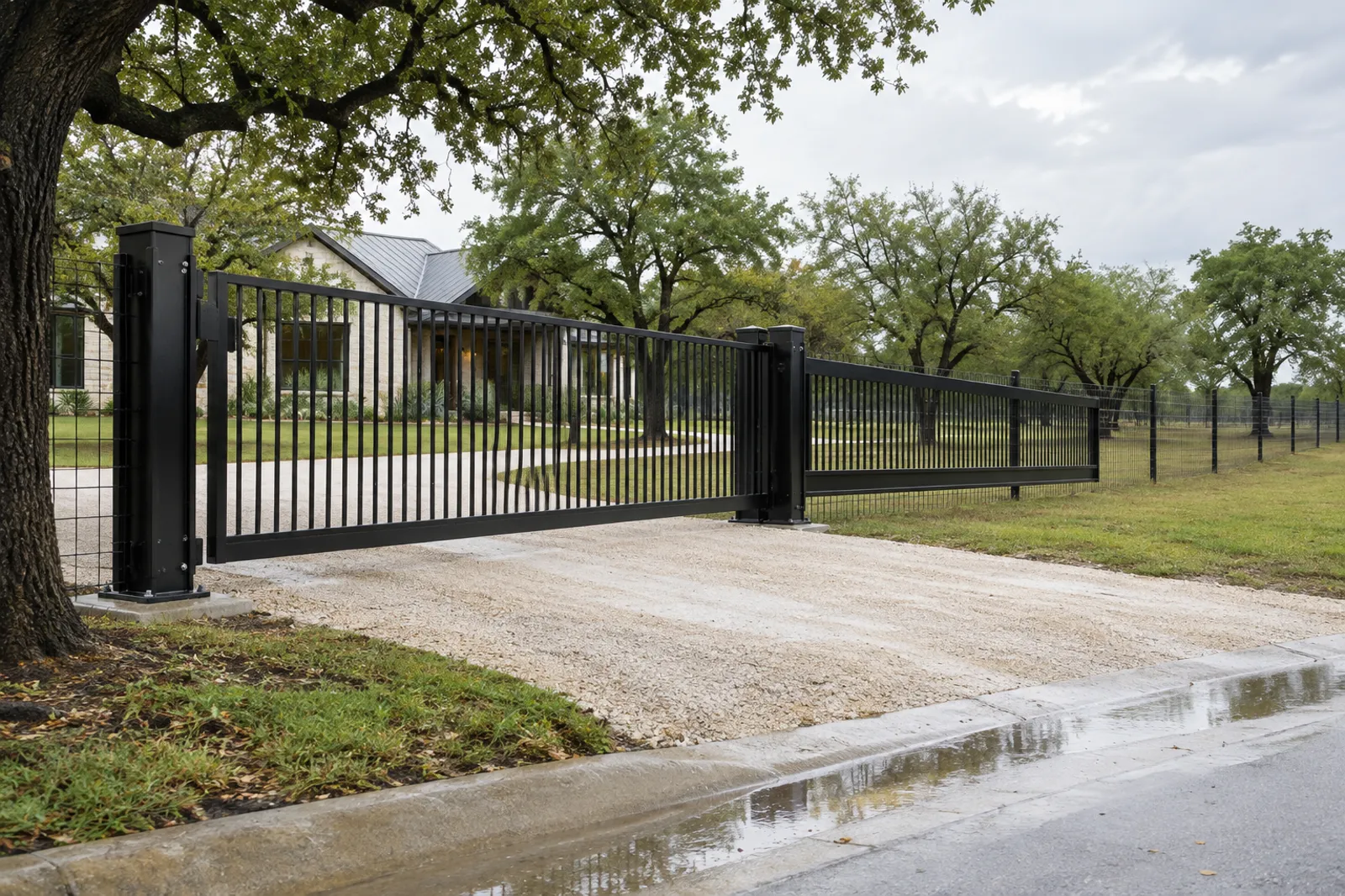
- 11-gauge frame tube with 14-gauge infill as the starting point, moved up a size when a leaf runs past 14 feet
- Coating order
- Blast, zinc primer, then polyester powder cured in the oven, with touch-up kits left on site for later scratches
- Footing plan
- Belled concrete piers 36 inches or deeper, with depth and rebar decided by what the auger hits at each post
- Infill gap
- Our shop spec keeps openings under 4 inches on anything near a pool or a walkway, drawn and measured before the coat goes on
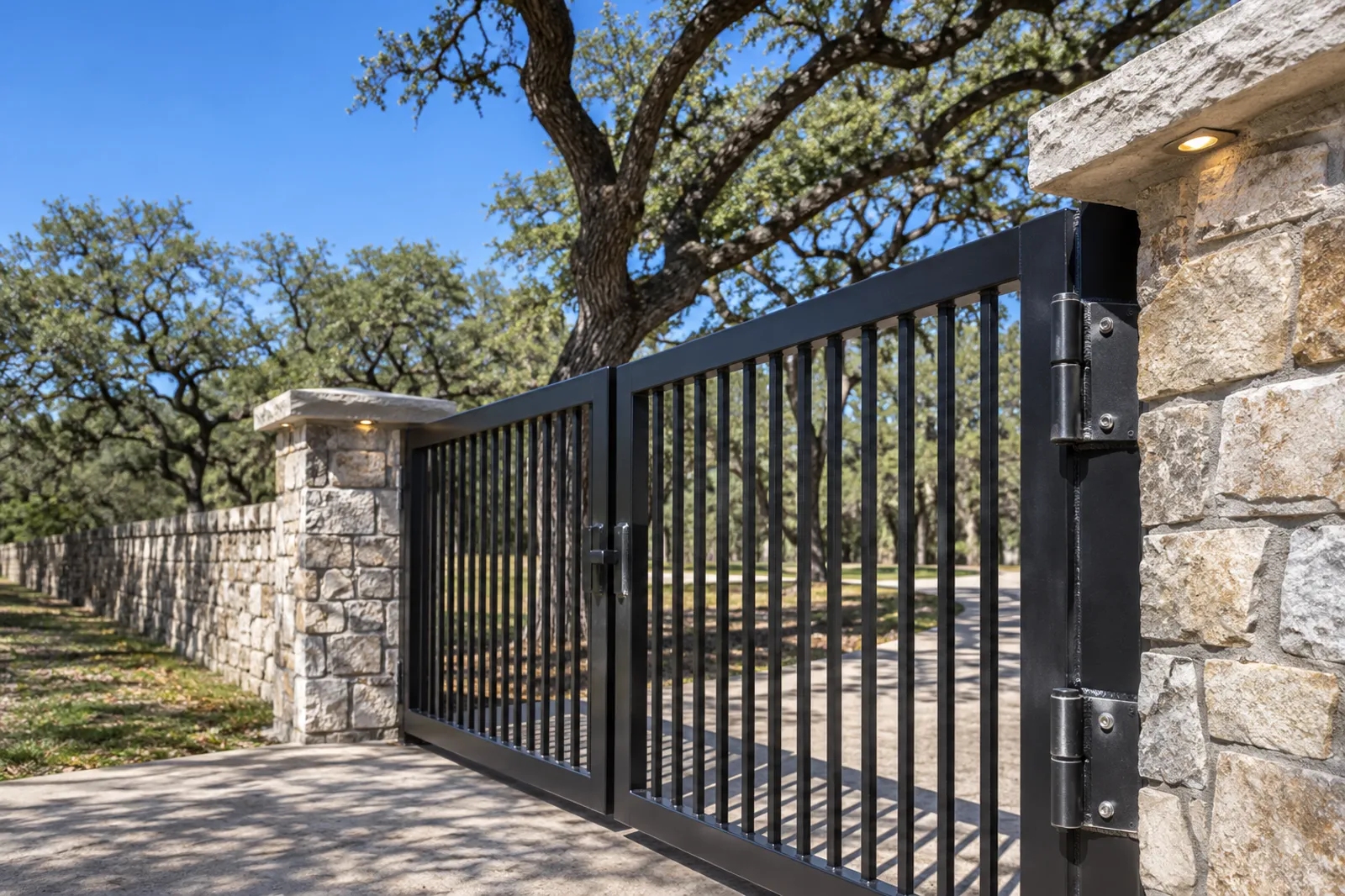
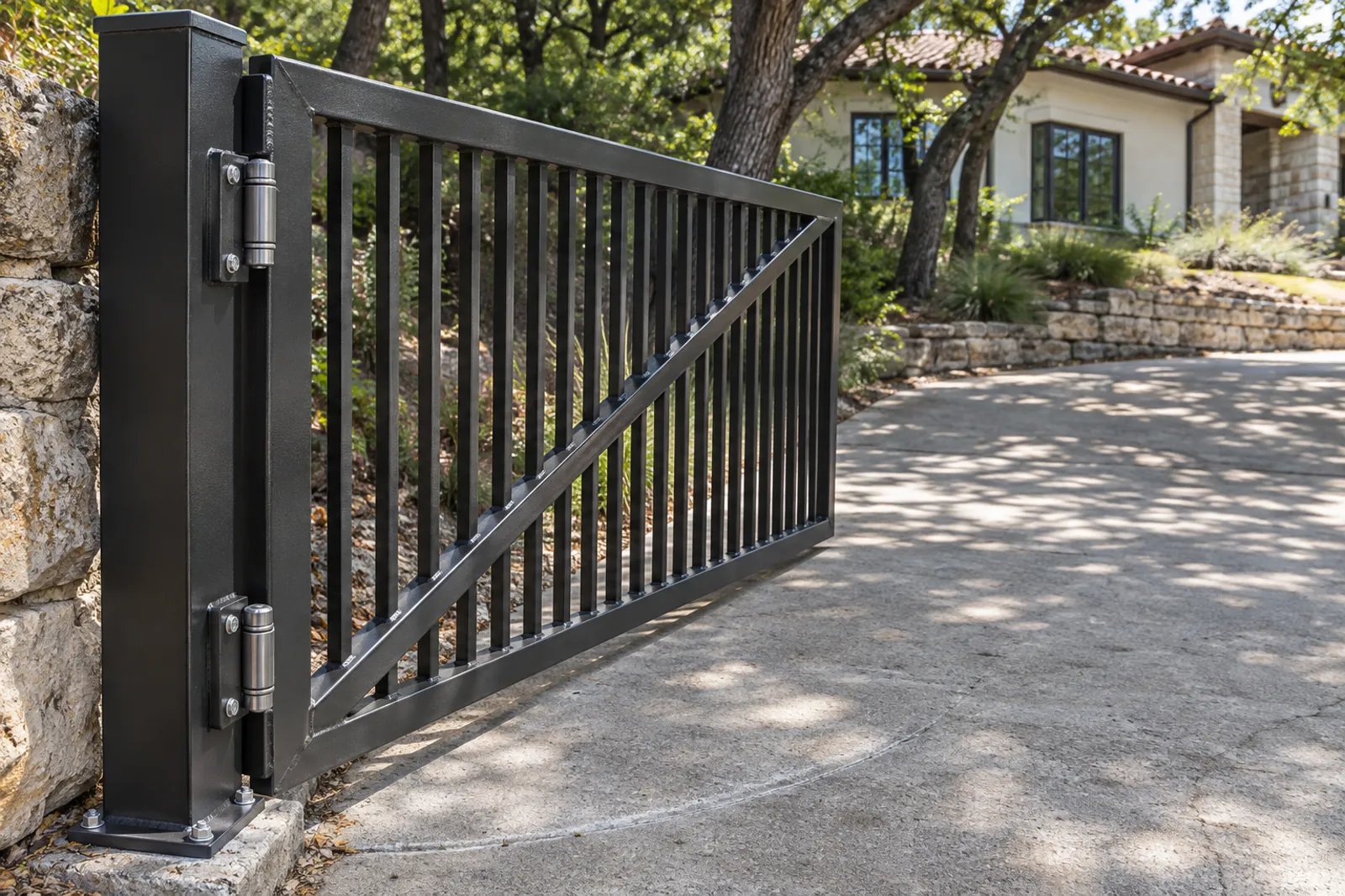
- Hinge load
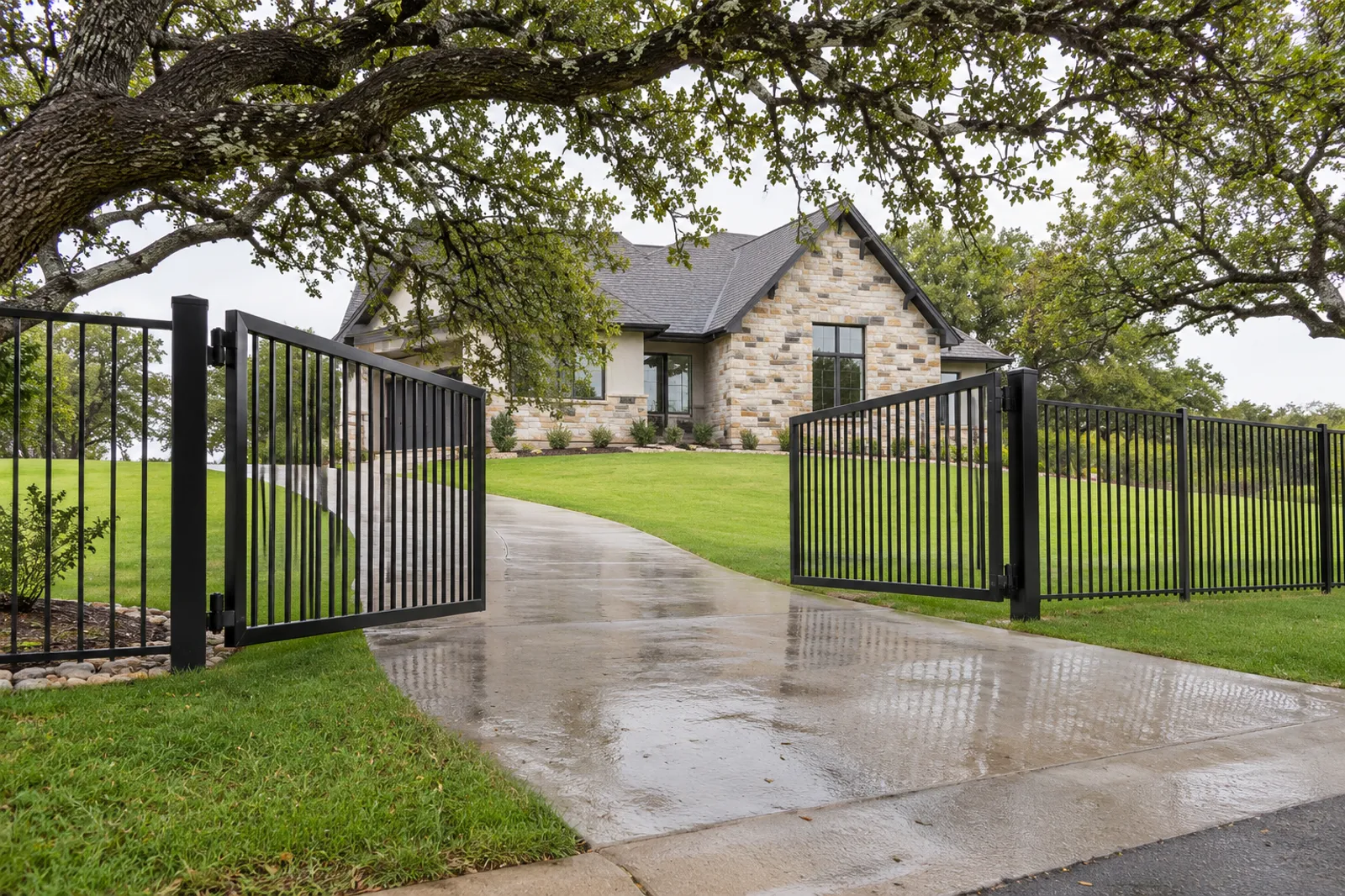
- Sealed ball-bearing hinges rated well past the finished leaf weight, with a greasable option on heavy pairs
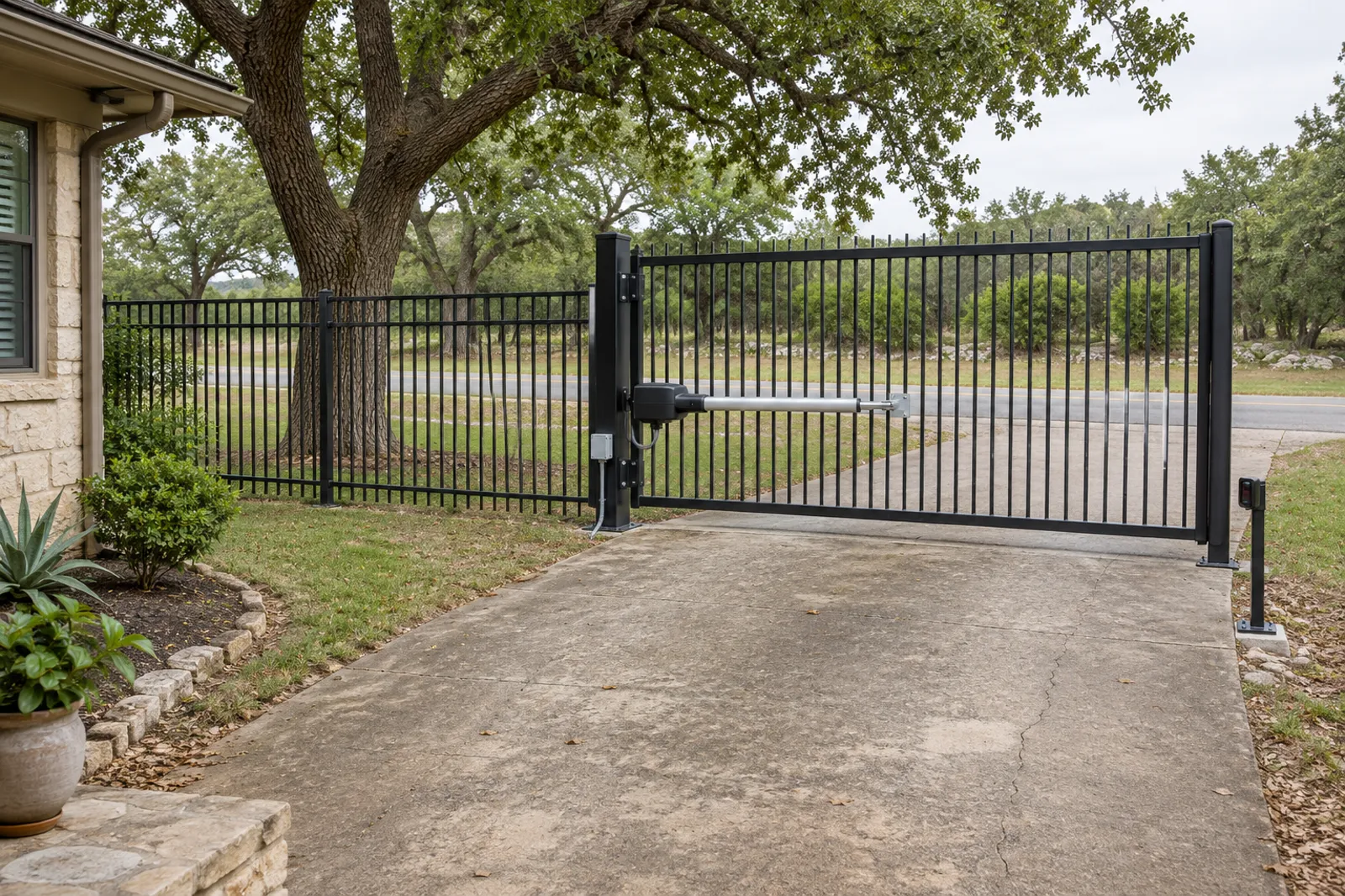
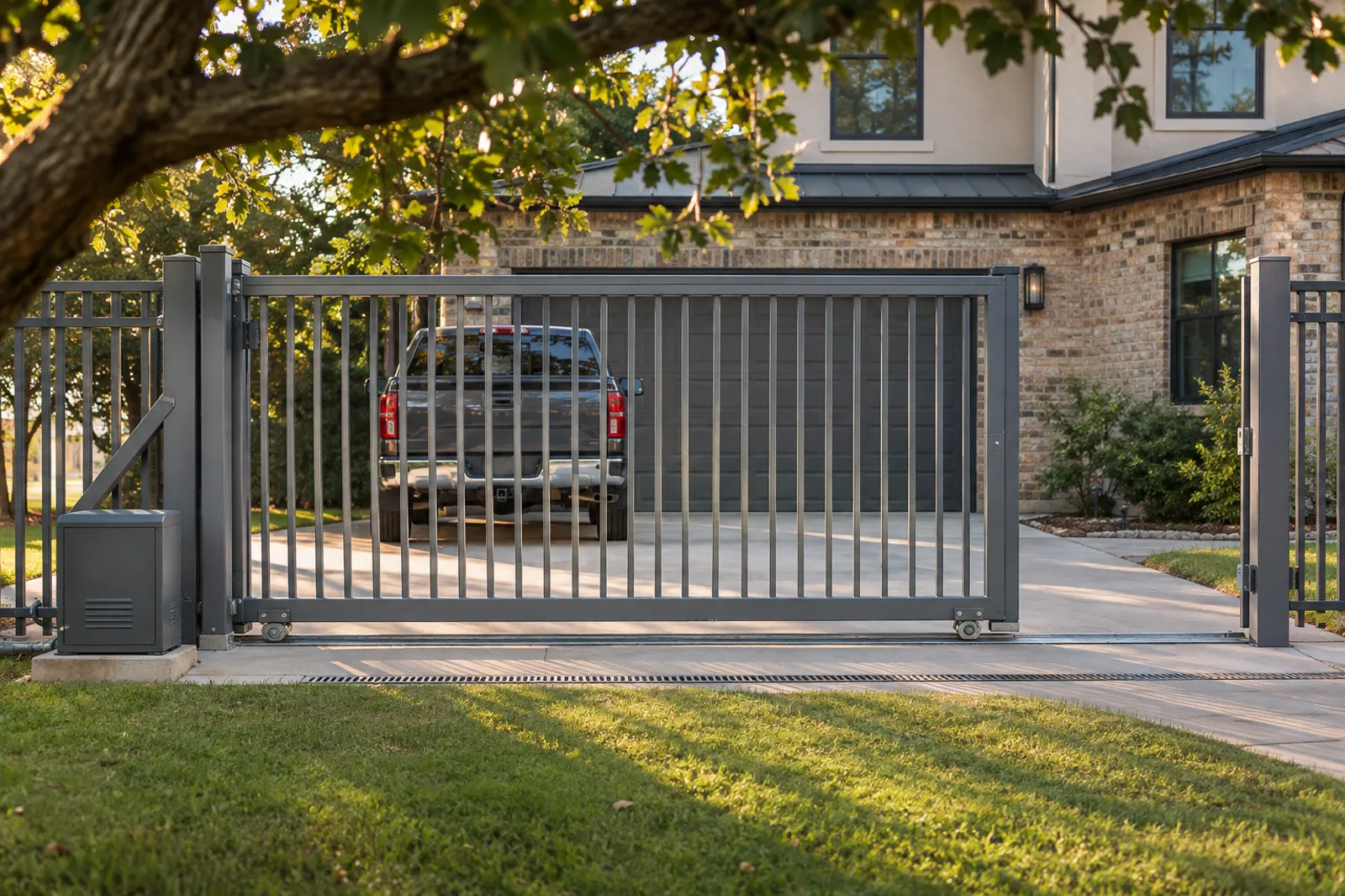
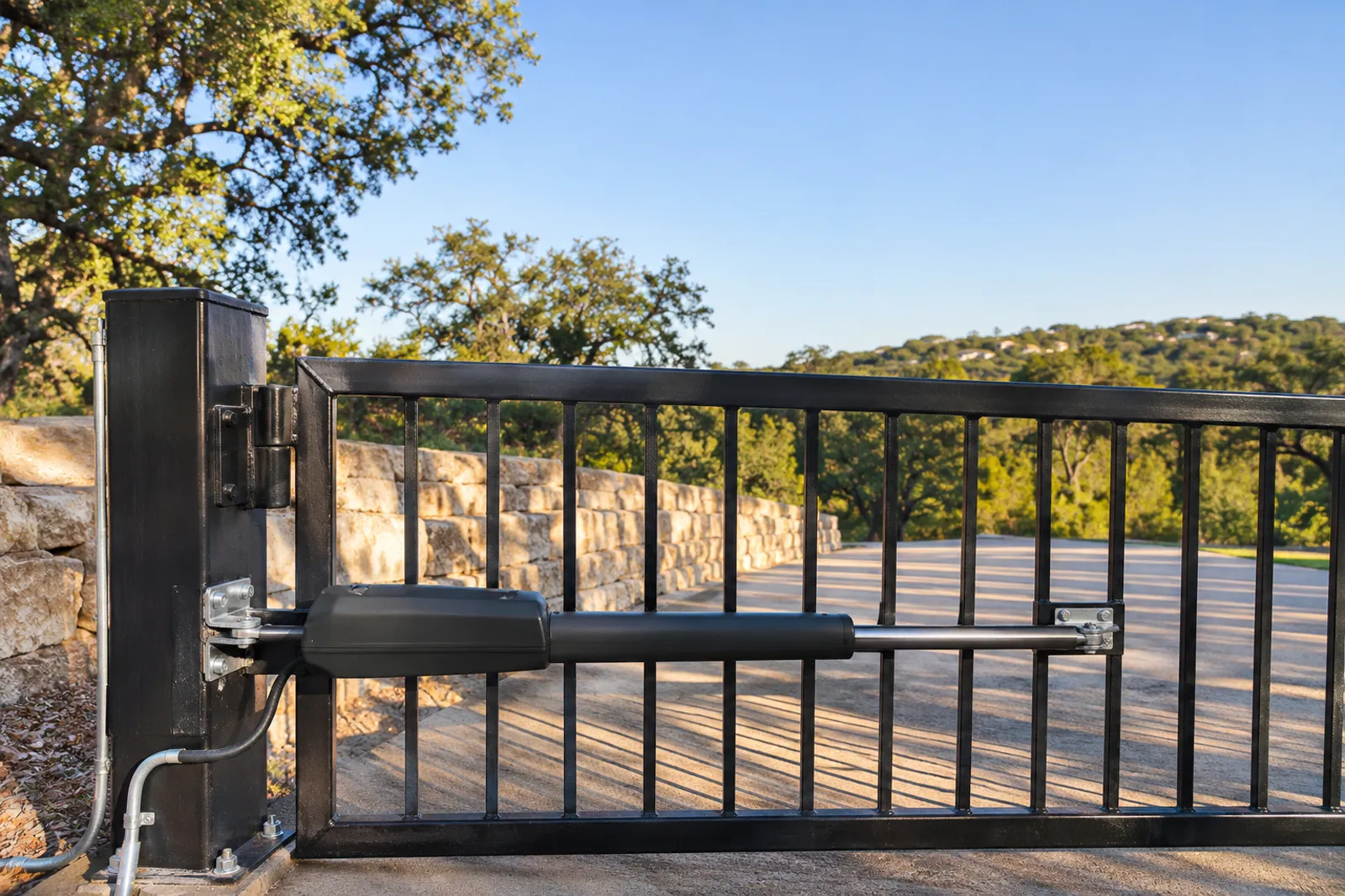
- Drive type
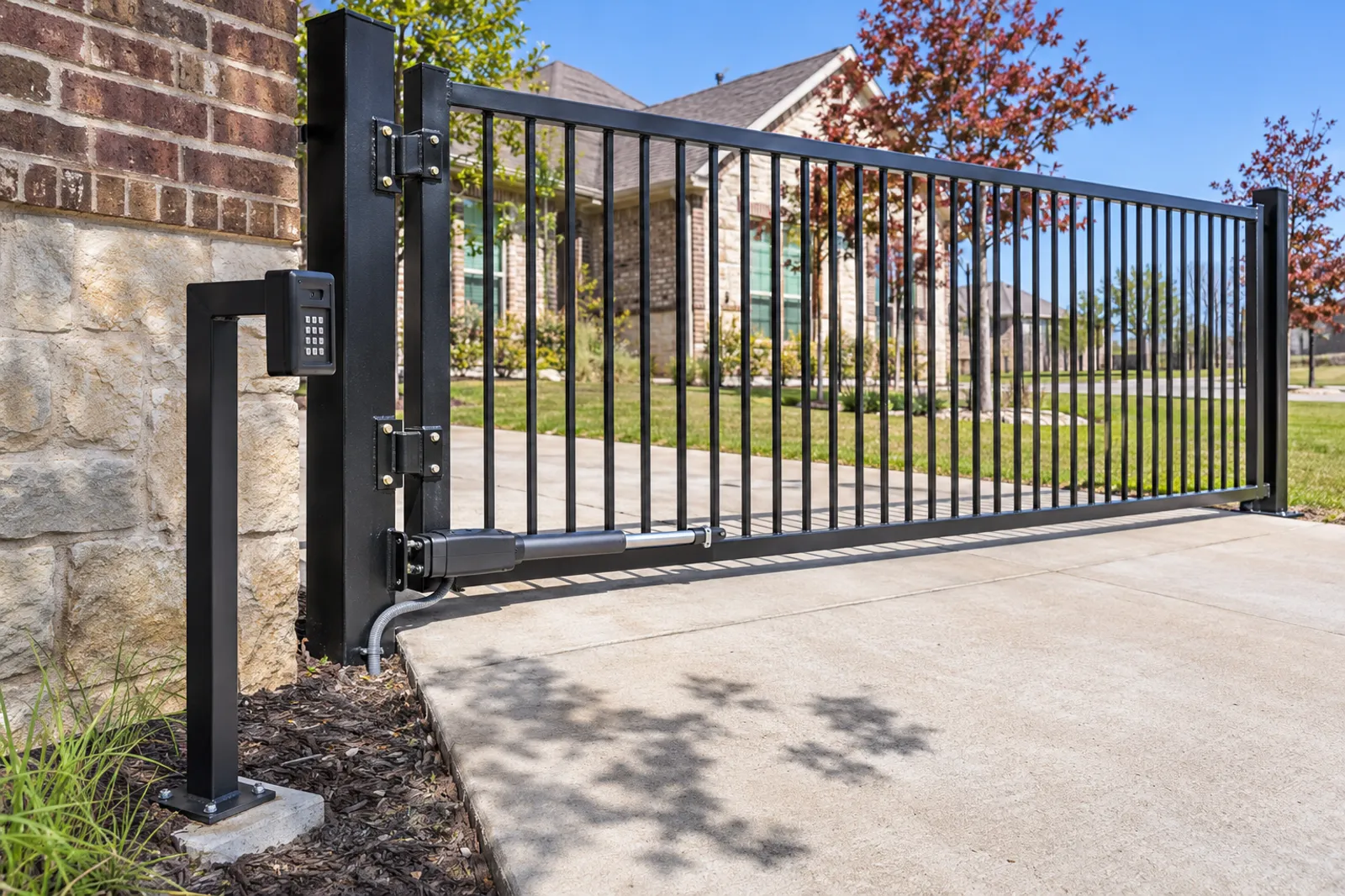
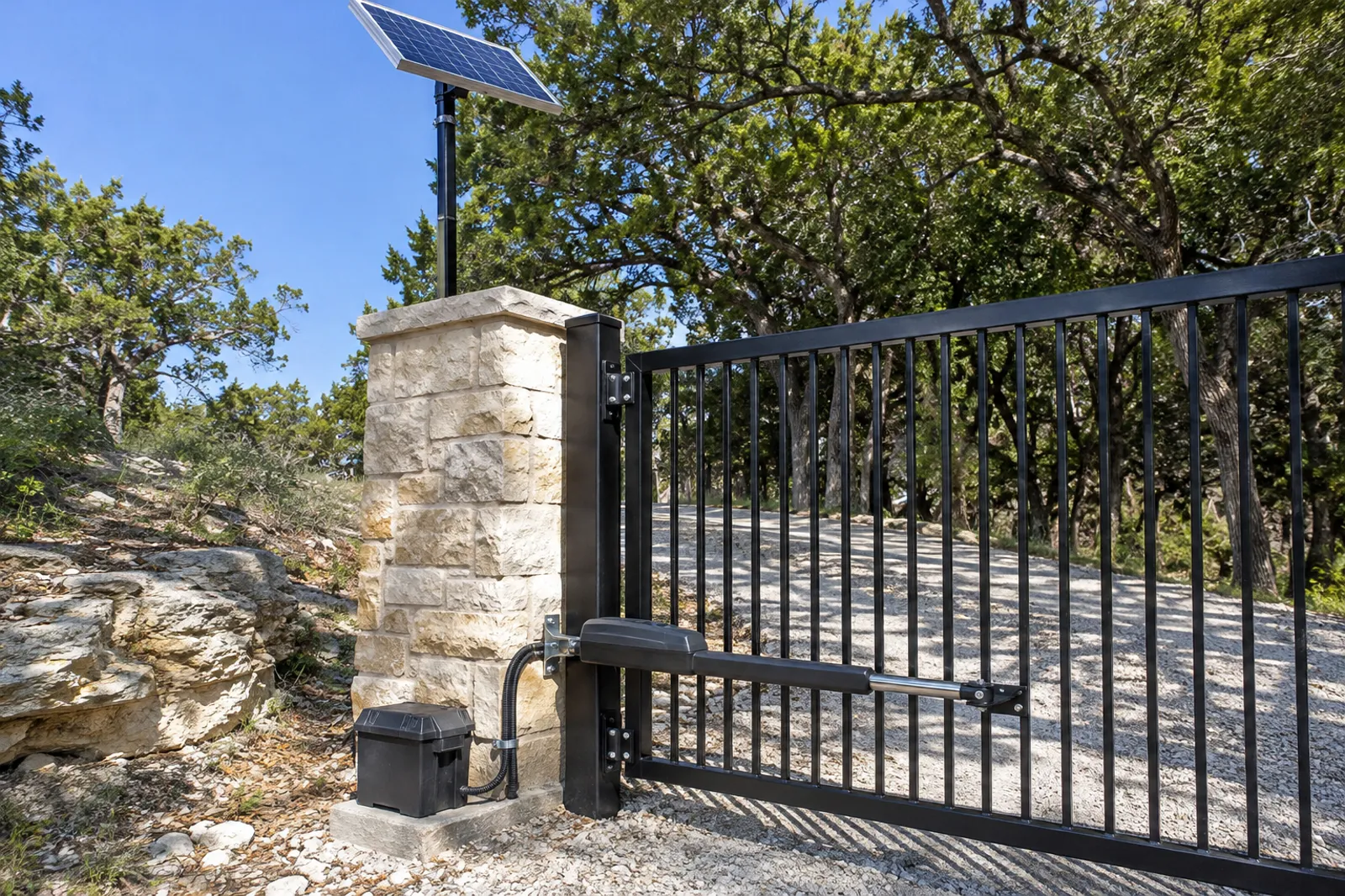
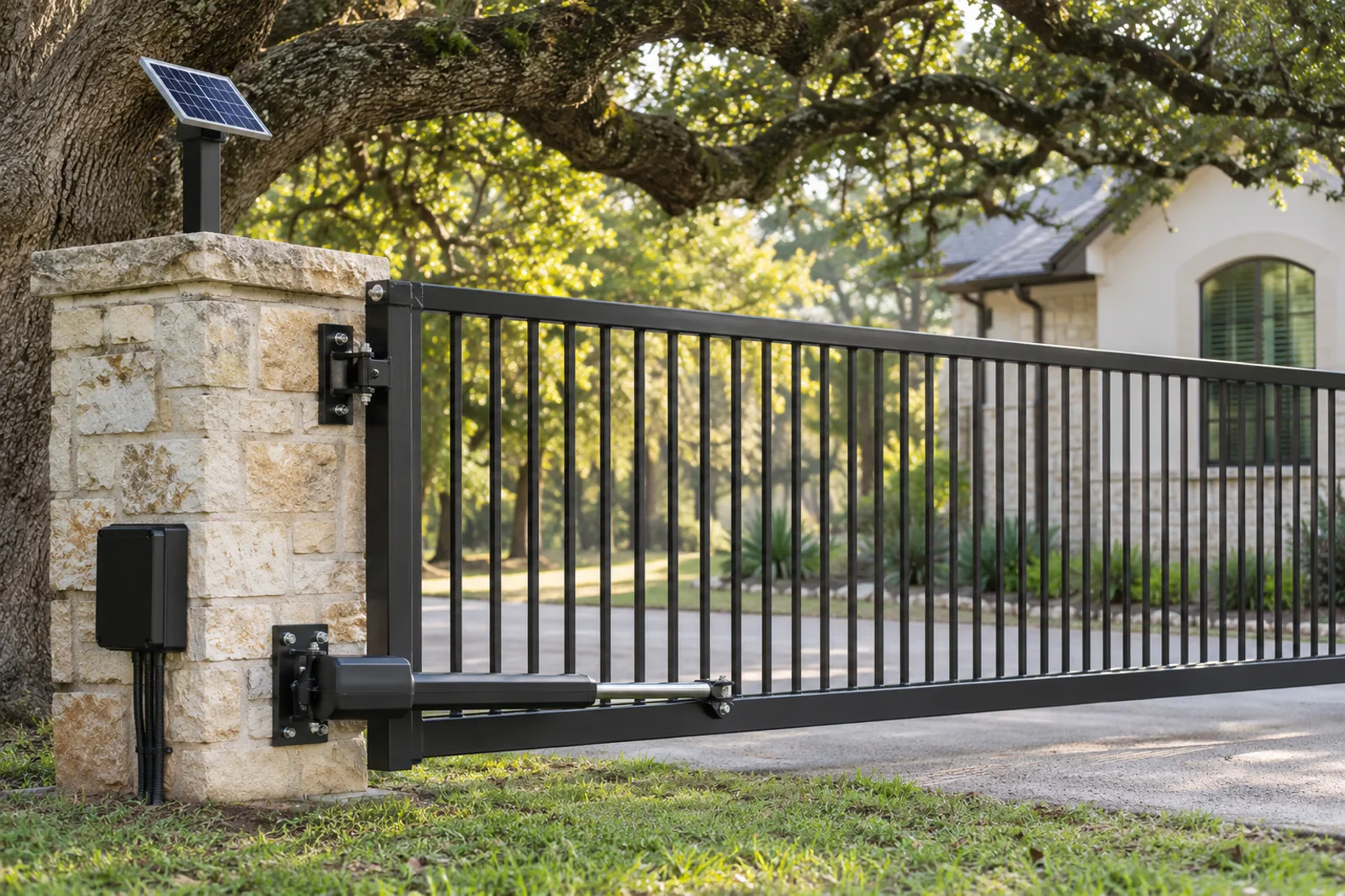
- Articulated arm, linear or pad-mounted slide operators, selected from leaf weight, column depth and daily cycles
- Safety kit
- Monitored photo eyes and edges wired for each entrapment zone, with the reverse on contact tested at handover
- First responder entry
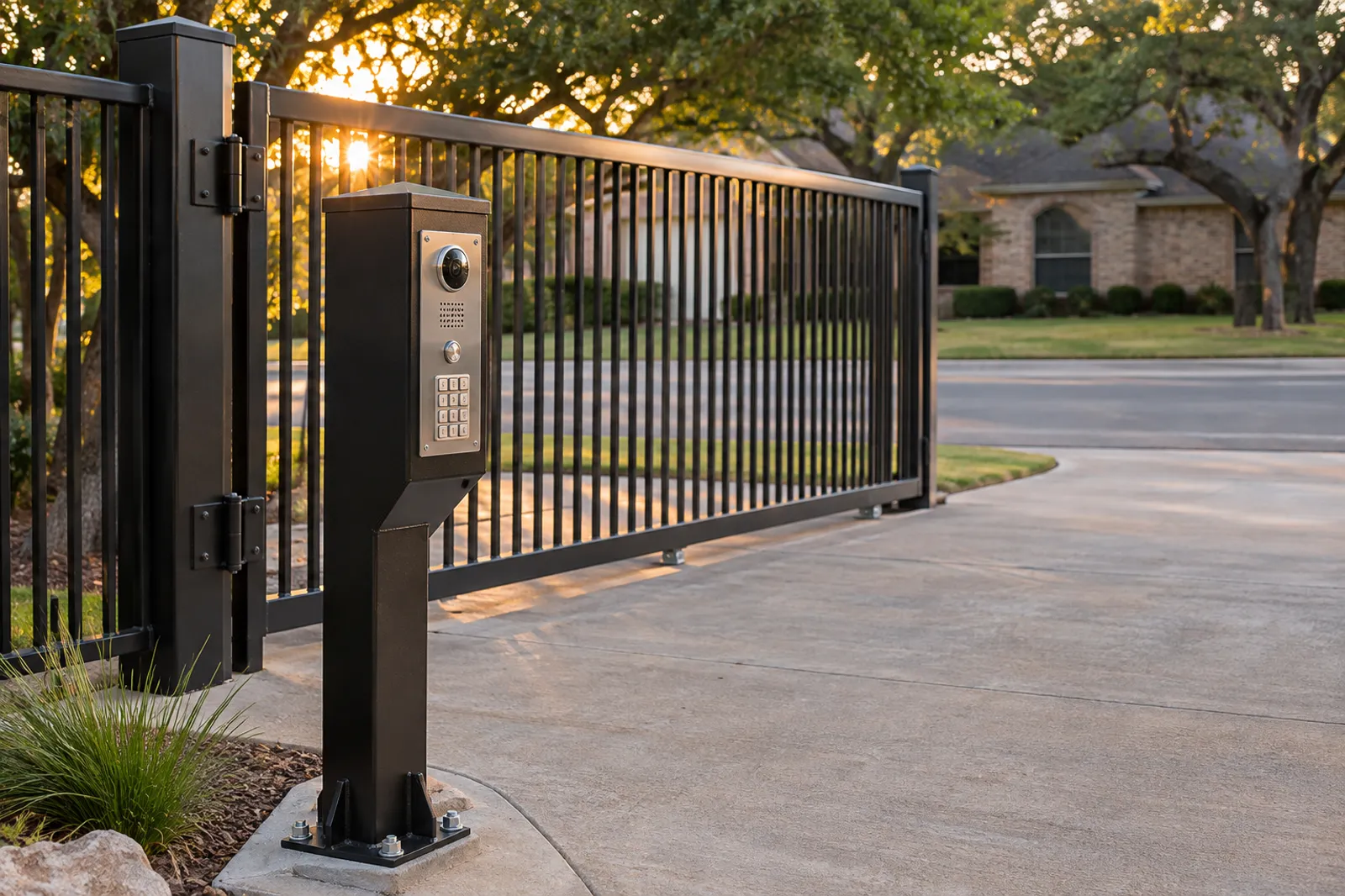
- Knox key switch, siren sensor or strobe as the local fire marshal asks, confirmed before the drawing is signed
- Grade method
- Racked panels on gentle ground and stepped sections on steep lots, with rise-and-run hinges for a drive that climbs
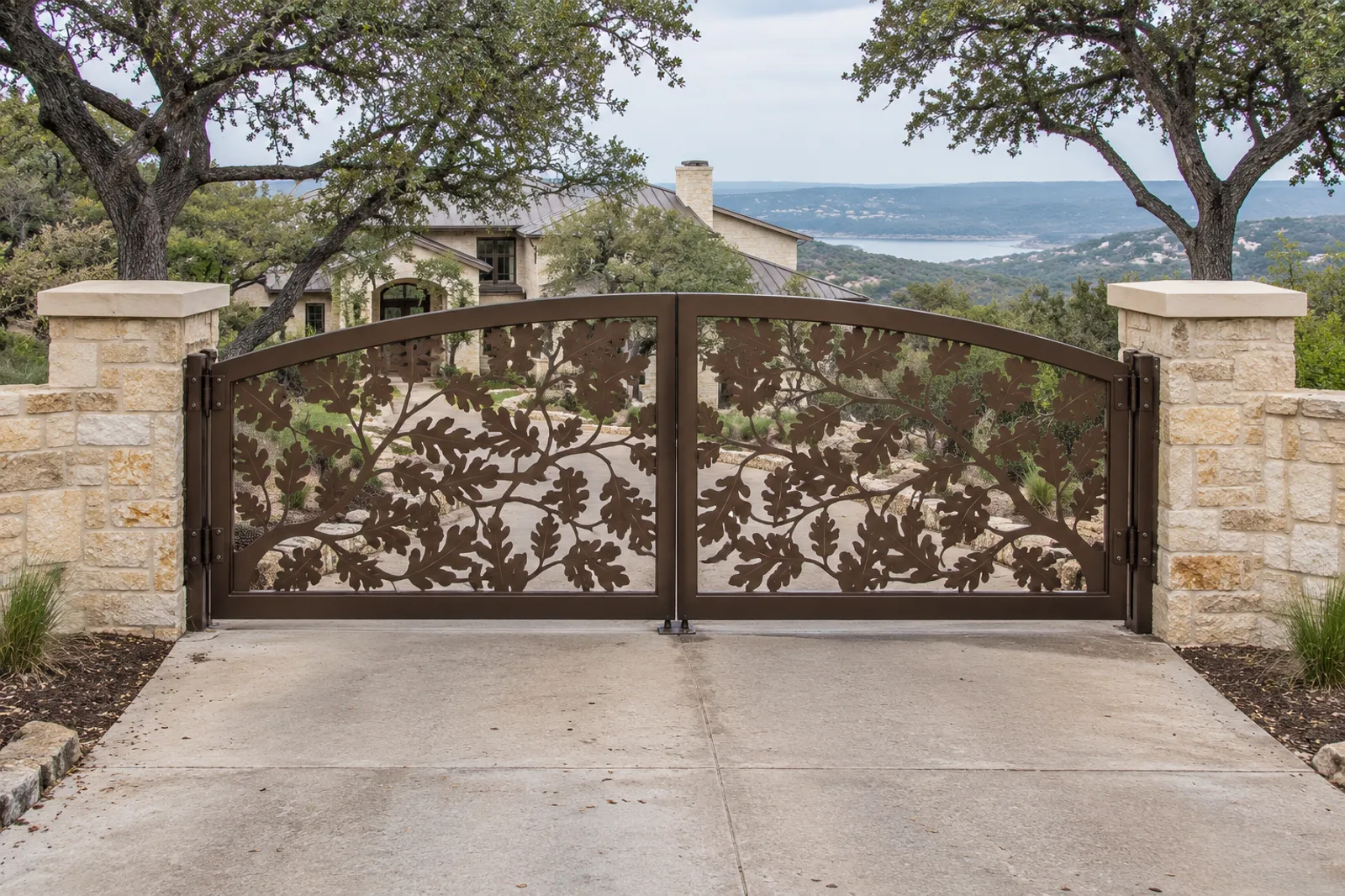
- Top profile
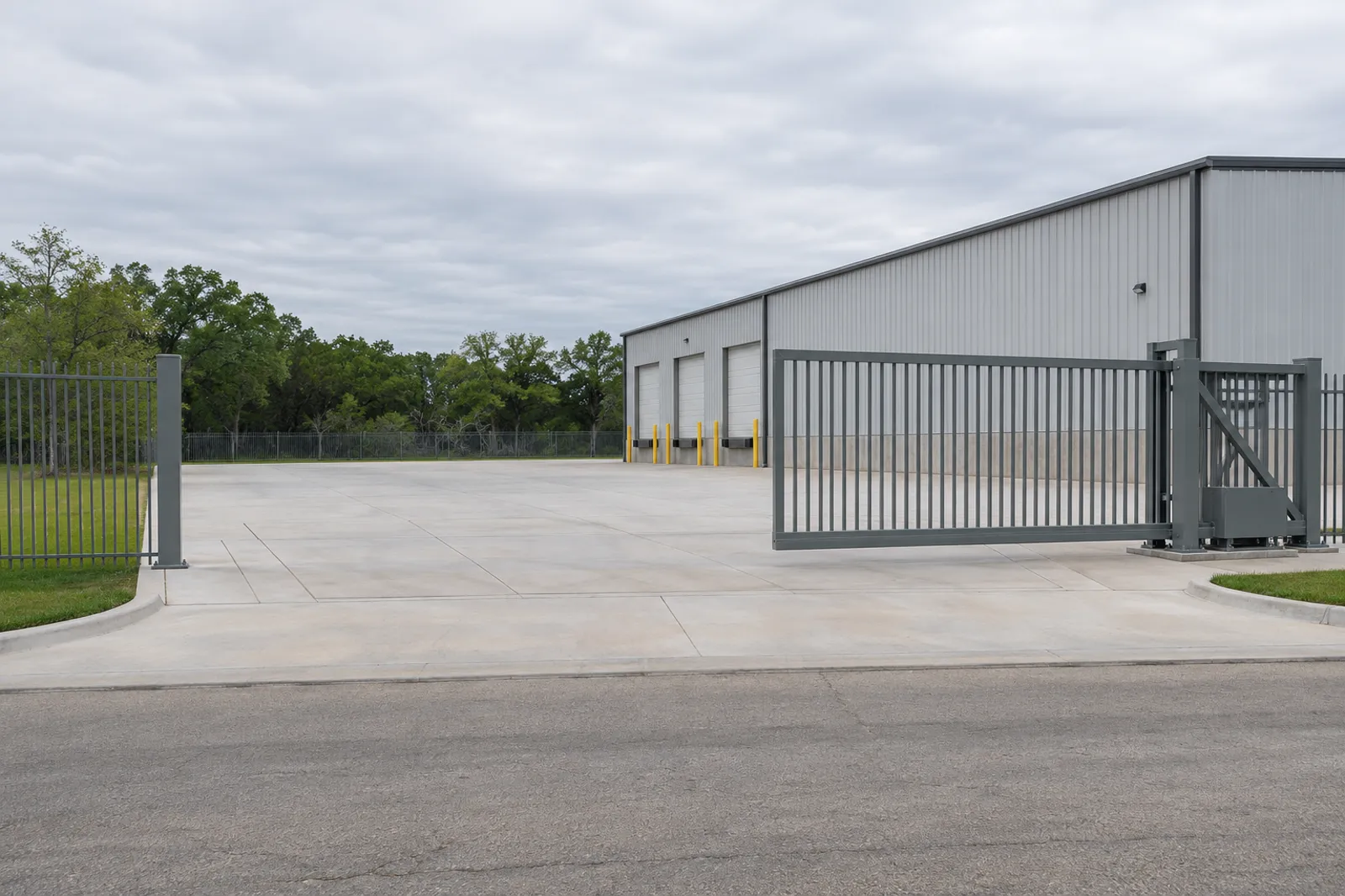
- Flat top, spear, arched or anti-climb rail, chosen against the HOA book and the security goal
- Bottom gap
- Clearance set from the high point of the drive arc, usually 2 to 4 inches, so a crowned slab never drags the leaf
- Outage plan
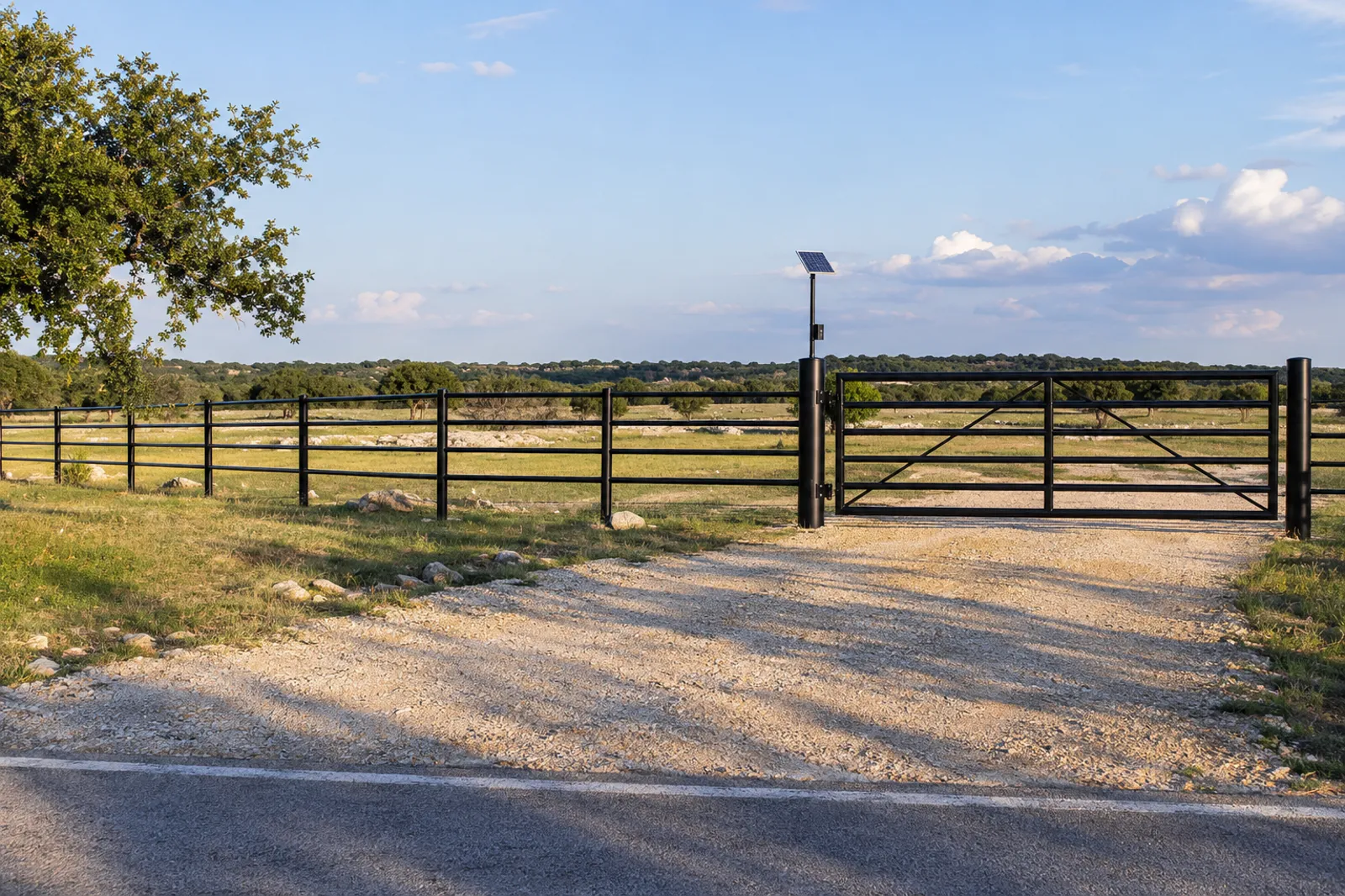
- Battery backup and a manual release on every operator, plus solar sizing for gates beyond the reach of a power run